• The Long Run

    The Long Run

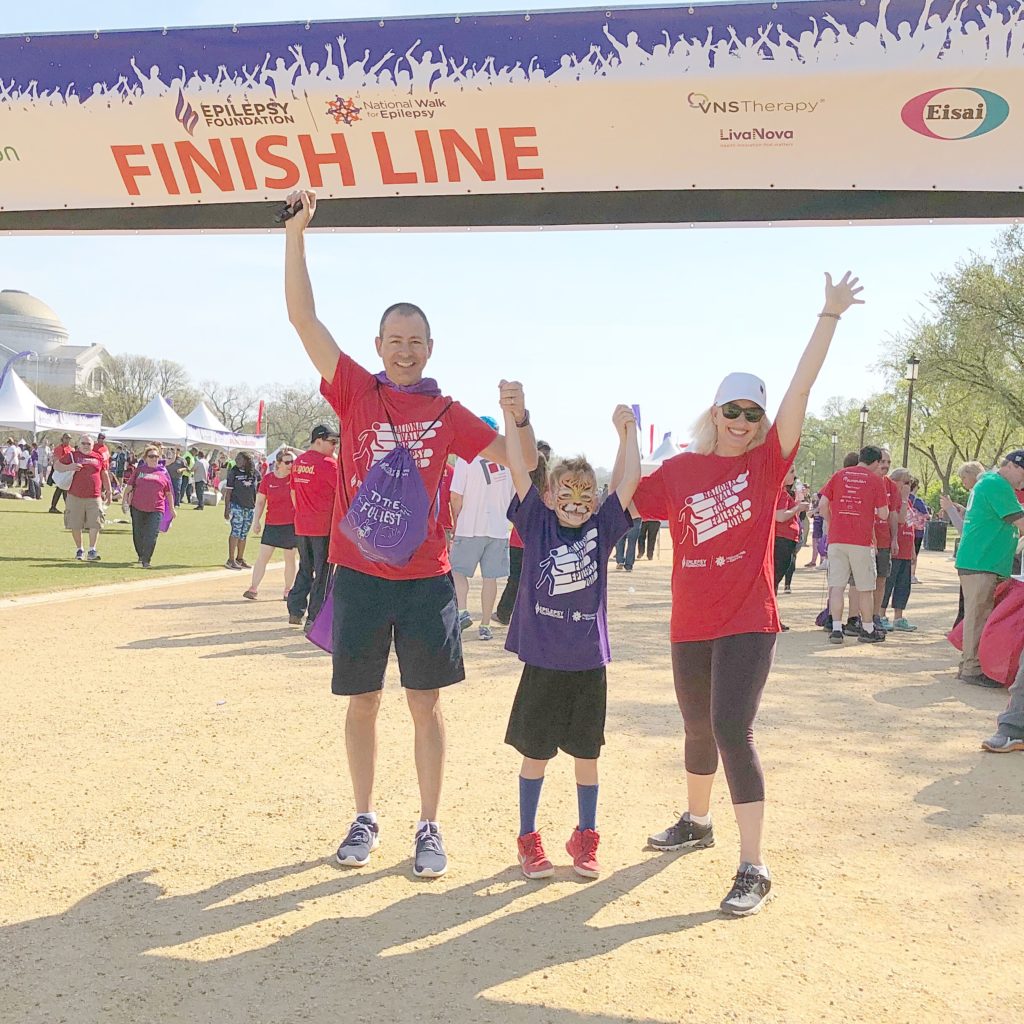
    My son stood on top of the first obstacle at the start of the race. He had just given an interview and talked about having seizures that had the crowd let out a collective “aww”. In his hand, he held the blowhorn that would signal the start of our wave. The emcee counted down then helped him push the button on the horn. It called out with its loud sound and the crowd cheered in response. The race had begun.

    By the time I had climbed the first obstacle to reach my son, he was already on to the next one. He thought he needed to lead our wave for the entire race, so I sprinted to reach him and told him to slow down. “It’s a long race, buddy,” I said. “This is only the beginning.”

    That is how my son approaches most things…head on and at full speed. It’s inspiring to see but also nerve-wracking. He’ll push himself beyond his limits without considering the consequences. For him, the consequence of physical exhaustion is seizures. My wife and I take on the role of the governor to regulate his unstoppable, unrelenting engine. That puts us in the middle of his desire to conquer the world and our desire to keep him safe. It’s an impossible balance and one that I rarely feel successful at. But I tried my best to pace him but also let him open up a little and have fun.

    He tackled each obstacle with a determined attitude and a beaming smile. There were people who saw his interview that ran by to cheer him on. He would wave in response as he eyed the next challenge. Another person came up and told him that she had epilepsy, too and that it wouldn’t stop either of them. I was proud of him, for how he was tackling the race, for talking about his epilepsy, and for that smile.

    If there were ever a metaphor for our life, it was that race. There will be obstacles that we need to face. There will be times that we need to be brave. There will be times we need to lean on and be grateful for the support around us. But there will also be fun and the sense of accomplishment that comes from doing things that are hard.

    As he came down the slide on the last obstacle, I could see a huge smile on his face. He put his completion medal around his neck and told everyone how he made it through each obstacle. Then, on the way home, he said he wasn’t feeling good. He went straight in for a nap and I could tell his body was shutting down. During his nap, he had a cluster of seizures, more than he has had in a while. That was the gut-wrenching part where I questioned whether I let him push himself too hard. I know that uncertain feeling too well, and it’s heartbreaking.

    As his body contorted against his will, I wondered whether it was worth it. The sense of accomplishment, the fun, and the experience. Was it worth what was happening to him? The lives of the people he touched when bravely stood on top of the first obstacle and told his story. The awareness he brought to epilepsy. The support he received from the people around him. Was that worth it?

    I used to think that was an impossible question, but maybe the answer is simple. What makes it worth or not it isn’t measured by finishes or medals or seizures. What makes it worth it is that feeling that, in spite of his epilepsy, he can do amazing things. What makes it worth it is knowing that we are in this together, for the good and the bad. What makes it all worth it, in the long run, is filling his life with moments that make him smile.


  • Bowling With Friends

    Bowling With Friends

    Recently, we went to a friend’s kid’s birthday party at a bowling alley. Of course, I had to bowl, too. In the lane next to me was a boy named Brody. He had a tiny, wiry frame and thick, black glasses. When we went for the same ball, he spoke to me but I wasn’t sure what he said. I asked him to tell me again and he repeated himself but I still didn’t get it. His mother who was standing behind him came over and told me it was okay if I didn’t understand him. She helped him get his ball and guided him back to the bowling ramp.

    The kid was a machine. He bowled ball after ball, sending one down the lane and then excitedly waiting for it to return up the chute. It was always the same pearl-colored ball, the same adjustment of the ramp, and the same smile.

    When the pizza arrived and the other kids sat down to eat, Brody kept bowling. His mother would stick a piece of pizza in front of his face, he’d take a bite, then put his ball up on the ramp. It was like watching an endurance athlete compete with a trainer by his side giving him fuel.

    At one point, Brody looked at me after I got one of my many, many (two) strikes and said “wow”. Then he said “fast”. I told him that it helped that I was bigger, but that I’ve watched him send some balls down pretty fast as well. He smiled and picked up another ball and sent it down the lane. “See?”, I said. “Fast.”

    For the next hour, Brody and I bowled side by side. We cheered each other on and after almost every ball we’d share a one-liner. I’d say “So close!” “Great ball!” “You’ll get it next time!”. He’d tell me to throw the ball fast again and “wow!” if the pins made a lot of noise and bounced around in the pit.

    At one point, Brody sent the ball straight down the middle of the lane. “That’s a good ball, buddy! Good ball!” I exclaimed. The ball pushed through all the pins leaving none standing. He looked at me with a look of such joy and I had the biggest smile on my face. Then he started dancing. Forget end zone celebrations from athletes that do them all the time. There is nothing like watching a kid who accomplished something own it with dance moves.

    At the end of the party, I told Brody how much fun it was to bowl with him. He reached over, smiled, and tickled me. I smiled back and went to change my shoes. Brody picked up his ball and carried it to the ramp.

    As I sat swapping one pair of stylish kicks for another, I noticed my wife talking to Brody’s mom. I didn’t think anything of it then. But as we headed out the door, Brody’s mom came over and gave me a big hug.

    My wife told me after we left how much the way that I treated Brody had meant to his mom. She told my wife that my son saw I how I treated Brody, so he will learn to treat people the same way.

    It broke my heart. All I did was treat Brody like the kid that he is, and that was enough to cause a reaction in his mother. Because, for whatever reason, the default from people is to not treat him that way.

    It made me think about how people treat my son. Most of the time, he looks like a normal kid and his seizures happen inside our bubble at home. But there are differences that kids do notice and that they already question. Why does his lunch look different from ours? Why can’t he eat the birthday cake? Why does he have an aide to help him in school? Why does he leave early or why is he absent so much? Right now, these questions come from curiosity. But I’m afraid that the day is coming when those around him will turn those questions into ammunition. We have lost our tolerance for people and things that are different.

    But the response should not be apologies and isolation. It should be inclusion and acceptance. I’m trying to show my son how to treat other people with kindness and respect so that he will do the same and expect the same in return.  I’m trying to raise a resilient kid that won’t let labels slung in fear or ignorance define him. I want him to understand that everyone has their stuff. But if we make an effort to get through that stuff, we can find a person worth knowing, just like he is worth knowing. And like Brody is worth knowing. And, sometimes, we get to make new friends and, if we’re lucky, we get to see the magic of a smile or a celebration dance. And, sometimes, that effort and that magic will affect the other people around us, too.


  • Being Remembered

    Being Remembered

    We were in Colorado recently, closing the sale of the house that we lived in when my son was born. Our agent sent us the lock code so we stopped by one last time. I hadn’t seen the house since we left it almost five years ago. As we stepped through the front door, it was like looking back into a forgotten time of our lives.

    The house was smaller than I expected, but nostalgia has a way of making things bigger than they were. We went from room to room telling each other the stories that we remembered. There might have been tears, some of joy and some of pain and sorrow. The feelings that surfaced were raw and real and big.

    We continued on until we reached my son’s room. We made our first memories with our son in that house. I remember bringing him home and putting him in the crib that we assembled together. I remember sitting on the yellow rocking chair singing to him as we looked out his window. I remember long nights, and changing diapers, and feeling that new-parent fear.

    As we toured the house, my son listened and told us that he remembered things, too. He told me how I would be on my knees playing goalie, blocking his shots when we played hockey in the basement. He remembered us eating vegetables from our small garden. He remembered us playing in the backyard on his swing set that my wife and I put together. Fortunately, he didn’t remember that we finished it at midnight after too many bottles of wine.

    My son was two when we moved to a different house and then four when we moved to Philadelphia. I wasn’t sure how of the stories he told us he actually remembered. What he said most likely came from us looking at pictures and telling him the details many years later. But whether he was remembering our memories or his, there was one thing in his version that caught me off guard. That thing was me.

    I know why it caught me off guard, though. I had two drastically different experiences as a child with my father and my stepfather.

    My parents split up when I was two, and I lived with my mother and my sister. My father was only occasionally in the picture. Sometimes he would take me to a hockey game or a baseball game, and we did “second Christmas” with his side of the family. I remember the hockey games, watching the Whalers on the ice and I can still hear their song echoing in my memories. I remember going to Yankee games, going down to the edge of the field during warm ups and catching balls. But the thing missing from those memories is my father.

    My stepfather coming into the picture changed my life. My mother was much happier and I had someone who spent time with me. I have memories of my stepfather and I fixing bicycles in the driveway. I remember him driving our old wood-paneled station wagon towing our camper with me in the passenger seat on the two-way radio. I remember making him laugh when my mother was trimming his mustache and his face as he tried to fight back the smile. Featured in each of those memories is my stepfather.

    I’ve often thought about the difference in how I think about my father and my stepfather. About how one is still in my life and one is not. About how one is in my memories and one is not. Neither is perfect but at least one of them was there and still is there for me. These experiences shaped what type of father I want to be to my son and how I want him to remember me.

    I want to be a part of his story. When he is telling his own children memories from his childhood, I want to be in them. I want him to see my face when he remembers that time he got a foul ball at a baseball game. I want him to remember me sitting on the couch next to him playing a video game or a board game. I want him to remember me helping him boogie board in Hawaii. I want him to remember with joy the “my dad always” remarks that show that I cared and was there.

    I want him to remember me, not for my sake, but for his. I want him to know and remember how important he was to me because I want him to feel important and loved. I want him to feel supported and strong. I want him to be a part of a childhood that set up for success instead of something that he will need to get over. My son is going to have enough things to overcome in his life. I don’t want him to ever question his worth or wonder where I was. Because I am here. And I love him more than anything. That’s how I want to be remembered.


  • One Thing

    One Thing

    Lately, my wife and I have started a new routine. We sit next to each other on the couch, flip open our computers, pull up our calendars, and look at the week ahead. Even though it’s all digital and we share our calendars, it gives us a chance to get on the same page. We can add any events that we miss or decide who is picking up dessert for dinner at a friend’s house later in the week. But it also gives us a chance to create a manageable week for our son.

    Fatigue plays a big part in the frequency and severity of my son’s seizures. If he gets too mentally or physically taxed, they break free from their confinement. Instead of happening only in the morning, he’ll have them during his nap or after he goes to bed at night. The more seizures he has, the less rested he is, which causes more seizures. It’s a cycle that we work very hard to avoid.

    In most cases, that means we only plan one activity a day. While other kids his age go between team practices, play dates, and birthday parties, he’ll do one thing. Instead of “and”, our lives involve a lot of “or”. A birthday party or a movie. The museum or the park. A play date or a baseball game.

    Some days, that one thing is school. Other days, that one thing is therapy. Those activities are so draining to him that, if he goes in already tired, he can barely function. We see that, too, when he leaves school early to go to one of his appointments. But on those days, we don’t have a choice. He wills himself through it but then he stays exhausted through the next day. If that happens, we adjust his schedule to try to prevent those demanding days from adding up. If we can’t, or if we miss the signals that he’s running on fumes, we lie next to him in bed, watching him pay the price.

    We had a few of those nights in early summer. School was ending and we tried to juggle therapy and baseball practice. He loved baseball, but it broke my heart to see what the physical exhaustion did to him at the end of the night. It was all too much, but deciding what to cut and when was impossible. School is important and provides social opportunities. Therapy helps rebuild those skills that he lost and reinforce those that he will need. And baseball…baseball made him feel like he was part of a team. And that he was a normal kid.

    I wanted to take this post in a positive direction. I wanted to say that “in lives packed with activities and distractions, having to choose what to do helps clarify what is important.” I do believe that, but I also hate having to decide what to take out of my child’s life. I hate having to limit him in any way. To have to pick one thing. For every day. Every week. Every month. With no end in sight. There is no positivity in that.

    But as conflicted as I am, it has inspired me to try to make that one thing amazing and special. And I try to be mindful, present, and grateful for that one thing. Because I know that, no matter how much it hurts, one thing is better than nothing.


  • Wherever We Go, There They Are

    Wherever We Go, There They Are

    Whenever we go to a new place, in the back of my mind I want that place to change my life. It seems like a tall order, which may be why it hasn’t happened yet. I want to go to a place and be so inspired that I start writing that book that I’ve been thinking about. I want to leave a place a better person, having a better relationship with the people in my life. But mostly, I want to go to a place where my son doesn’t have any seizures.

    My son didn’t show any signs of having epilepsy until we moved to Philadelphia. I was only partially joking with the doctors when I asked them if it could be Philly causing his seizures. The first time we went back to Colorado, I was ready to move back if he was seizure-free during the trip. But he wasn’t. I had the same thought when we visited Florida. Maybe Colorado was at too high of an elevation and he needed an ocean breeze. But he had seizures in Florida, too. And in New York. And in California. Wherever we went, there they were.

    Even so, when I stepped off the plane in Hawaii, I had that same thought. That maybe this was going to be the place where my son would be seizure-free. If it was going to be any place, Hawaii wouldn’t be terrible. Before we even picked up our bags, I convinced myself we could make it work. I could find a job, even if it meant working remotely. I was sure the children’s hospitals would be fine, and we could make regular trips back to the mainland for care. But we wouldn’t need to, because he wouldn’t be having seizures. It was the perfect plan. Until it wasn’t.

    In our first early morning in paradise, the sound worse than every other sound filled the hotel room. His seizures had found us. Across the continent, across the ocean, to an island in the middle of the Pacific. In a place we’ve never been before, hidden from the world. Wherever we go, there they are.

    In a way, I was grateful that the seizure came quickly because it lifted the pressure that I had put on our vacation. The longer I carry that pressure, the less present I am and the more I miss of our life. But instead of worrying about that seizure around the corner, it had already come.

    It was freeing.

    It allowed me to focus on having an amazing vacation with my family in spite of our stowaway. It allowed me to be present and to be grateful for the moments that we have. I saw the beauty of the island. I saw the smile on my son’s face. It reminded me that it’s not a destination that is going to change my life. It’s that feeling that I get when I see his smile that makes my life better every day.

    epilepsy dad wherever we go


New posts on Tuesdays.
Follow along.

About

I’m Dave. I write about raising a son with refractory epilepsy.
Read more.

Recent Posts