Tag: family

  • The Water Level: Disability and Technology

    The Water Level: Disability and Technology

    When driving comes up, I tense.

    It doesn’t happen every time, but when we’re with other families and someone mentions permits or practice drives or the freedom of having a new driver in the house, something tightens in me. I watch my son. He doesn’t say anything. He just goes quiet and waits for the conversation to move somewhere else. I usually help it along.

    I don’t know exactly what he’s thinking in those moments. I don’t ask. Maybe it’s nothing. Maybe it’s everything. But I was in that exam room when his neurologist answered his question about driving, and I know what “probably not” sounds like when it lands.

    His friends are getting permits. He’s watching that happen from the outside, the way he watches a lot of things.

    I think about his future more than I let on to him. I think about medications they haven’t discovered yet. Therapies. Devices. I think about his independence — what it might look like, what it might require. Autonomous vehicles have been part of that thought for a while. Not as a certainty, just as a possibility worth holding onto. So when I came across a podcast recently about autonomous vehicles and what they might mean for people who can’t drive, I expected something that confirmed what I’d been quietly hoping. Instead it pulled in two directions at once.

    The first part was about job displacement — the ways AI is already eliminating work, particularly at the lower end. Automation moving through the kinds of jobs that don’t require a degree or specialized training. The ones with structure and repetition. Then the second half shifted to autonomous vehicles and the disabled community. The argument was straightforward: people who can’t drive because of a medical condition, a physical limitation, age — autonomous vehicles could give them something they don’t currently have. Independence. The ability to get somewhere on their own.

    And then someone in the episode pointed out that the disabled community was being used to make the case for technology that primarily serves other interests. That the promise of accessibility was real but also convenient. I don’t know where the truth lands on that. Probably somewhere uncomfortable.

    My son is sixteen. He wants to be a hockey player or a streamer. Neither is straightforward. Hockey as a player isn’t realistic, though being involved in the sport in some other way might be possible someday. Streaming is something he genuinely enjoys, but it requires consistency, memory, sequencing — things that are hard for him right now, harder than they look from the outside. He has dreams the way any teenager has dreams. He just has more walls. And the jobs most likely to be within reach for him — the ones with structure, repetition, and the right support in place — are the same ones that automation is already eliminating.

    I’ve worked in AI for more than a decade. I use it every day. The work it’s making easier is white collar work — the kind that requires education, executive function, the ability to synthesize and decide. The jobs it’s eliminating are the ones that could work for him.

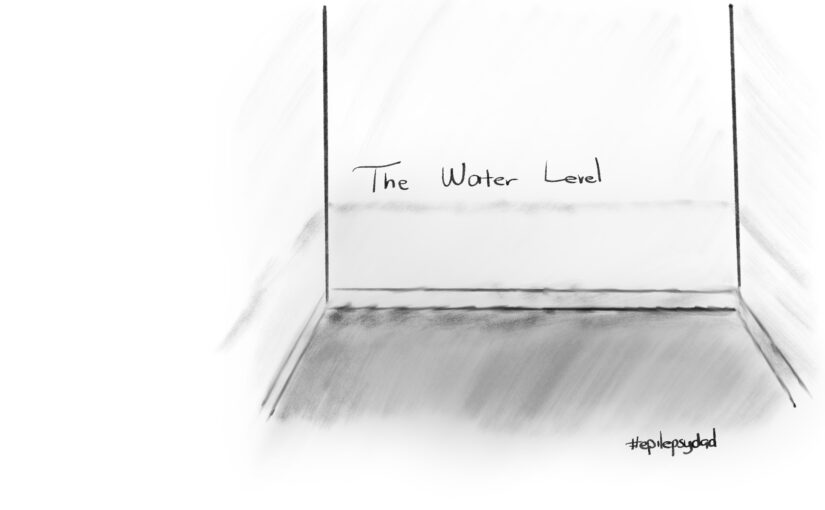
    The water level keeps rising. He’s already underwater.

    That’s the part I can’t think my way out of. Autonomous vehicles might eventually give him a way to get to a job on his own. That would matter. That would be real. But if the job itself has been replaced by the time the technology arrives, the independence doesn’t have anywhere to go.

    I don’t know how to hold both of those things. I’m not sure I’m supposed to yet.

    What I keep coming back to is that exam room. His neurologist exhaled before she answered. My son sat there and took it without flinching. Part of him probably already knew. Part of him was hoping for a different answer.

    He’s been doing that his whole life — absorbing the gap between what other kids have and what’s available to him. Sitting quietly while the conversation moves on. Waiting.

    I don’t know what the world looks like when he’s thirty. I don’t know which promises will have been kept and which ones will have turned out to be convenient. I don’t know if the door that technology seems to be opening will still be open, or what will be on the other side of it if it is.

    I just know he’s sitting with questions he shouldn’t have to sit with at sixteen.

    And I know what it looks like when he goes quiet.


    I also wrote about this topic from a different angle on davidmonnerat.com, where I explore the structural side of the question — who technology is built for, who it displaces, and why those two groups are often the same people. You can read that piece here: The Other Hand: AI, Disability, and the Cost of Progress.

  • A Step Back From the Edge

    A Step Back From the Edge

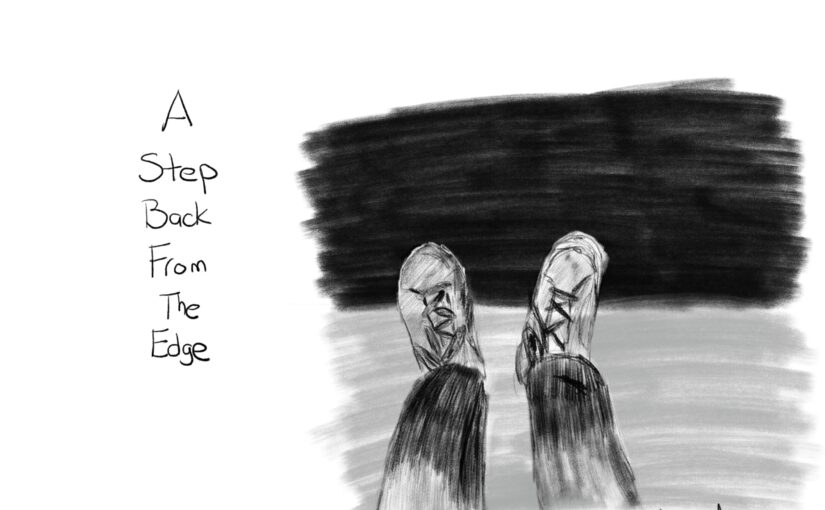
    I used to feel like I was already over the edge.

    Not standing near it. Not testing it. Over it.

    There were stretches where it felt like I was constantly catching myself mid-fall. Managing medications. Managing schedules. Managing finances. And at the same time, bracing for volatility. Wondering what I was walking into at the end of the day — whether it would be a call from school, a number on a bill, or a silence that meant something had already shifted.

    It wasn’t dramatic in the moment. It was just normal. That’s what makes it harder to recognize in hindsight. I was in freefall and calling it responsibility.

    My son still had seizures. My goddaughter still struggled. Work still pressed. But layered over all of it was instability. The kind that keeps your nervous system activated even when nothing specific is happening. The kind that makes you feel like collapse is always a few inches away.

    I hate heights.

    If I look over the side of a building, my body reacts before my mind does. There’s a queasy suspension. A sense that gravity is closer than it should be. That feeling used to live in my chest most days. Not because catastrophe was constant, but because it was always possible.

    The edge is still there.

    My son still has seizures. A cold still increases risk. My goddaughter is still medically fragile. Work is still work. The debt is still heavy.

    But I’m not over it anymore.

    I’m a step or two back.

    I can see the drop. I don’t like it. I don’t pretend it isn’t there. But I’m standing on solid ground. The weight I’m carrying feels steadier. It doesn’t swing the way it used to.

    That’s the difference.

    The risk hasn’t vanished. The responsibility hasn’t lessened. The uncertainty hasn’t resolved.

    What’s changed is the footing.

    I’m not bracing for the next shove. I’m not scanning every moment for signs of collapse. I’m not ending each day with the sense that I barely made it through.

    I’m standing.

    Close enough to respect the edge. Far enough back to move deliberately.

    The edge isn’t gone.

    But I’m not falling anymore.

  • A Place Where Awareness Ends

    A Place Where Awareness Ends

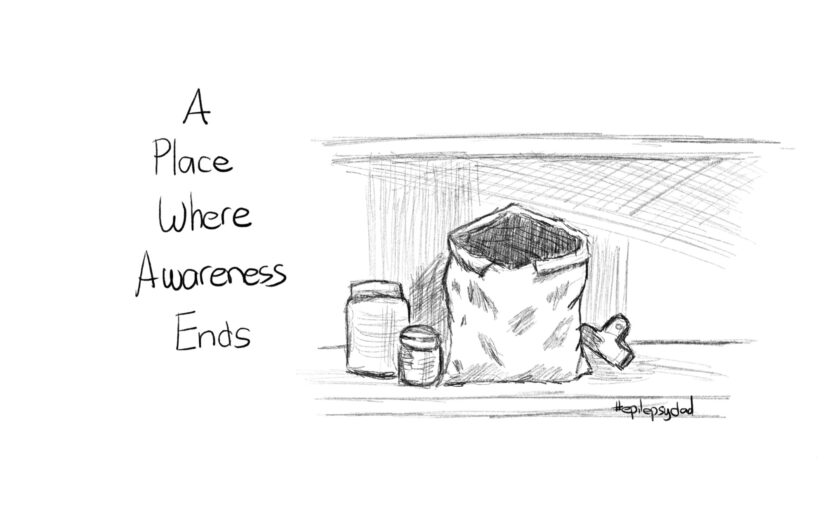
    I was making lunch for my son and went into the pantry to grab the bag of cheese puffs. It was the big bag, the one we keep on the top shelf. He had some as a snack after school the day before.

    The bag was wide open.

    It was sitting exactly where it always sits, but unfolded, unsealed, left the way it was when he last touched it.

    He knows to fold the bag over. We’ve talked about using a chip clip to keep it closed. I suspect he remembered that he needed one, looked for it, didn’t see it in the basket where they usually are—probably because something was in front of them—and stopped there. He’s not great at moving things out of the way to see if what he’s looking for is behind them. And instead of asking for help, he put the bag back on the shelf and walked away.

    This happens a lot.

    The cereal bag left open on the counter. A piece of recycling placed on top of the bin instead of inside it. A dish in the sink instead of the dishwasher. His lunchbox still holding an apple core or a wrapper from earlier that day.

    It can feel like I’m following his tracks through the house, noticing the small places where things were almost finished. Little markers of effort that ran out just before the end.

    I don’t get mad when I find the bag open again. I recognize it as a place where his awareness ended that day.

    I offer gentle reminders. Sometimes they stick for a while. Sometimes they fade, and weeks later I find the cereal bag open again on the top shelf. Not because he doesn’t care. Not because he’s being careless. But because holding all the steps—seeing the problem, finding the tool, moving obstacles, finishing the task—can be more than his brain can manage in that moment.

    This is what a lot of caregiving looks like.

    Not emergencies. Not hospital rooms. Not big, dramatic moments. Just quiet maintenance. Picking up what was left behind. Closing the loops that didn’t quite get closed. Learning to read these small, unfinished things not as failures, but as information.

    They tell me where his energy ran out. Where his attention drifted. Where the world became just a little too much to hold all at once.

    So I fold the bag. I clip it shut. I rinse the lunchbox. I don’t sigh. I don’t lecture. I just keep walking behind him, filling in the gaps.

    This is part of how I love him.

  • Not a Map, but Landmarks

    Not a Map, but Landmarks

    I’ve spent a lot of time lately telling myself that I don’t have a map.

    That’s been true, and in some ways, it’s been comforting. A map suggests routes and timelines and destinations. It suggests confidence. It suggests that someone knows how this is supposed to go.

    I don’t.

    But as the weeks pass, I’m realizing that even without a map, landmarks are coming into view.

    There are dates on the calendar now. Not dramatic ones, and not ones I want to narrate in detail, but meaningful ones. Moments where things that have been suspended will start to settle. Where uncertainty will narrow, even if it doesn’t disappear.

    I still don’t know how all of this will look when it’s finished. I don’t know the exact shape of my days or where everything will land. There are decisions I haven’t made yet, and some I won’t be able to make alone.

    But there are things I do know.

    I know I want custody. I know I want stability for my kids. I know that taking care of my family comes first, even when it’s hard and even when it’s expensive. I know that the debt and the mess left behind don’t get ignored just because they’re uncomfortable. They get faced, one step at a time.

    I know that whatever comes next has to fit the reality I’m in now, not the life I imagined a few years ago. I’m not trying to rebuild an old version of things. I’m trying to build something that can actually hold.

    Those aren’t plans. They’re not strategies. They don’t tell me how any of this will work.

    They’re landmarks.

    They’re fixed points I can orient toward when everything else feels vague. They tell me which direction matters, even if I don’t yet know the route. They help me decide what gets my energy and what doesn’t, what I’m willing to compromise on and what I’m not.

    For a long time, I thought maps came first, and movement followed. Now I’m learning that sometimes it works the other way around. Sometimes you move carefully, paying attention, until enough of the landscape reveals itself enough to sketch something resembling a path.

    I’m not there yet.

    But I don’t feel lost in the same way I used to. I can see what I’m walking toward, even if I can’t see how to get there. That has been enough to keep me moving through the uncertainty without rushing past it.

    Maybe the first map isn’t routes or timelines or answers.

    Maybe it’s priorities.

    For now, these landmarks are enough. They give me a way to stand inside what’s coming without pretending I’m ready for all of it. They remind me that not knowing the details doesn’t mean I’m directionless.

    It just means I’m still on the way.

  • Choosing Without Certainty

    Choosing Without Certainty

    I used to wait until I was sure.

    Certainty felt like responsibility. It felt like proof that I had thought things through far enough to move without regret. If I could explain a decision, if I could justify it to myself and to others, then it felt safe to act.

    That approach worked when life moved more slowly. When the variables were limited. When waiting did not carry much cost.

    That is not where things are now.

    A lot is already in motion. Some of it by choice, some of it not. Changes are unfolding that do not pause while I gather clarity, and waiting for certainty no longer feels responsible. It feels like standing still while the ground continues to shift beneath me.

    What has been hardest to accept is that staying put is not neutral.

    Indecision has consequences too. Not dramatic ones most of the time, but quieter ones that accumulate. Lost momentum. Lingering tension. The constant effort of holding everything in place while pretending nothing has changed yet.

    Choosing without certainty looks different than I expected.

    It is not decisive or confident, and it does not arrive with relief. Most of the choices I am making now are small and provisional. They are for-now choices, decisions that can be revisited, adjusted, or undone if needed. They do not try to solve everything at once.

    I am choosing when to stop instead of always pushing through. I am choosing not to answer every question immediately. I am choosing direction over destination, and movement over mastery. I am choosing what is survivable over what is optimal.

    That is a shift for me.

    I used to believe the right choice would feel solid, that it would quiet the noise and settle the uncertainty. Now I am learning that sometimes the right choice simply reduces the pressure enough to keep moving.

    Right does not mean permanent. It does not mean perfect. It means proportionate to the moment I am in.

    I still want certainty. I still look for it. Old habits do not disappear quietly. But I am learning to move without certainty when I have to, to trust the information I have, to respect my limits, and to accept that clarity often follows action rather than preceding it.

    I do not know where these choices lead. I do not have a clean narrative arc or a clear end point in mind.

    I just know that standing still is not an option anymore.

    So I am choosing without certainty. Not because I am ready, but because movement, imperfect and reversible, has become the most honest response to a life that is already changing.

    For now, that is enough direction.