Tag: parenting

  • The Transition Year

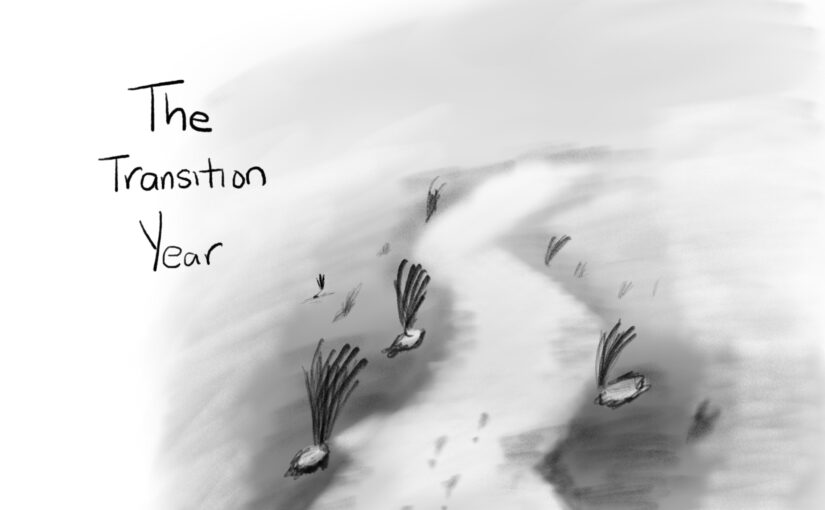
    The Transition Year

    It’s the start of another new year.

    This one doesn’t feel like it’s asking for resolutions—the kind that usually get abandoned before the month is out. It’s not about exercising more, losing weight, eating better, or drinking more water. It’s not about learning French, or guitar, or drawing, or how to cook something impressive.

    This year isn’t about optimization.

    There will be fundamental differences this year. Not because I’ve planned them carefully, but because change is already in motion. Last year was when many things fell apart. As a result, I’ll start this year one way, and by the end of it, some of the most basic facts of my life will be different.

    2025 was loss.

    2026 is transition.

    Transition is uncomfortable. It’s unstable. It’s the in-between where nothing is settled yet, but nothing can go back to the way it was. There’s no clean narrative arc. No before-and-after clarity. Just movement. Unstoppable movement.

    It’s not rebuilding yet.

    It’s not new beginnings.

    It’s packing things up without knowing exactly where they’re going.

    There’s grief in that. And uncertainty. And more questions than answers.

    But there’s also something honest about it.

    This year isn’t asking me to reinvent myself. It’s asking me to pay attention. To stay upright while things shift. To keep showing up for my son, for my goddaughter, for the responsibilities that didn’t disappear just because everything else changed.

    If 2025 was the year everything fell apart, then 2026 is the year I learn how to move through what’s left.

    Maybe 2027 will be the year of something new.

    I don’t need to decide that yet.

  • The Lost Year

    The Lost Year

    This has been an extremely difficult year.

    Not difficult in a single, dramatic way.

    Difficult in the slow accumulation of loss.

    The kind that doesn’t arrive all at once, but keeps showing up until you realize you’re standing in a year that no longer resembles the one you started in.

    My father passed away this fall.

    It was slow, and then it was fast. Months of watching a body fail, followed by an ending that still came as a shock. His world had grown smaller. His body no longer cooperated. His mind, at times, betrayed him. He was unhappy in ways that couldn’t be fixed.

    His death brought grief. And guilt. And the familiar questions that arrive uninvited:

    Should I have spent more time? Should I have been more patient? Should I have done something differently?

    It also brought relief. And that’s harder to admit out loud. Relief that he wasn’t trapped in a body that no longer worked. Relief that the suffering had ended. Relief that the waiting was over.

    I am grateful that we moved him closer. Grateful that my son got to know him. That he saw my son play baseball. That he showed interest in my son’s life, even as his own was narrowing. Those moments matter. They don’t cancel the loss, but they soften its edges.

    Work added its own quiet weight this year.

    For much of the year, I was in a role that wasn’t a good fit. The frustration built slowly, then all at once. Fear kept me there longer than I should have stayed. Responsibility did too. The job search dragged on, heavy with uncertainty. I eventually landed somewhere new, which brought some relief—but even that has continued to shift. The year ends without the sense of stability I hoped for.

    My son still hasn’t seen the benefits we were hoping for from DBS. In fact, he’s having more seizures now than he was at the beginning of the year. When you’ve lived with uncertainty for this long, you’d think it would lose its power. It doesn’t. Each setback still lands hard.

    My goddaughter’s health has changed as well, requiring more care, more attention, more presence. The needs don’t slow down just because you’re already stretched thin.

    There have been other changes this year, too. Big ones. The kind that rearrange the shape of your life without asking permission. The kind that leave you trying to find your footing in a version of the future you didn’t expect to be standing in.

    This year can’t end soon enough.

    It feels like a year of subtraction. A year where things were taken faster than they could be replaced. A year where even gratitude felt heavy, like another thing I was supposed to hold carefully and do “right.”

    And still, some things remain.

    My son.

    My goddaughter.

    My dogs.

    My health.

    A few friends.

    A job. Insurance. Shelter.

    I don’t list these things to balance the scales. They don’t erase what was lost. They just exist alongside it.

    I’ll carry them into the new year. I’ll keep showing up for the kids. I’ll keep working toward better outcomes where I can, and accepting limits where I can’t. I’ll keep looking for steadier ground.

    This year feels like the floor.

    Not the ceiling.

    Next year isn’t about rebuilding what was lost. Some things can’t be rebuilt. Some things shouldn’t be.

    Next year is about making something new.

  • Another Milestone He Cannot Reach

    Another Milestone He Cannot Reach

    We sat in the exam room, waiting for the doctor.

    It was his regular follow-up with his neurologist. She has managed his care for almost ten years. She has been with him through keto, multiple surgeries, and the rollercoaster of physical and emotional effects that his condition has had on my son.

    This appointment, in particular, was one I had been dreading ever since my son brought up the topic of driving with his therapist. She suggested that he ask his neurologist about it at his next appointment.

    This was that appointment.

    There was a significant buildup between his first mention of driving and this appointment. I know it was on his mind, so it was on my mind, too. It wasn’t the anticipation of the question or the uncertainty of what the answer might be. The mounting pressure came from the finality of that answer when it was given.

    The pressure built up slowly as the days went on. But the morning of the appointment, it spiked. Asking that question was the only thing on my son’s mind. He brought it up when we left the house. He brought it up when we got to the hospital. He brought it up to me when our appointment started, even before the pleasantries were done. I motioned for him to wait.

    After his exam, his doctor asked if he had any questions.

    I looked at my son and nodded, indicating it was time for his question.

    He looked at the doctor and asked the seven-word phrase that he had been holding onto for weeks.

    “Will I ever be able to drive?”

    The pressure that had built up finally exploded, pushing the air out of the room.

    I looked from my son to the doctor as she formulated her answer. I saw her shoulders lower as she took a breath. Careful, concerned, and compassionate. But also direct.

    “Probably not,” she said. “No.”

    I looked back at my son. I couldn’t judge his reaction. He sat there, taking a punch to the gut and not even flinching. He knew what the answer was going to be. And then he heard it. And then… nothing.

    I knew what the answer was too, and it’s not like I was hoping for a different answer. I just hoped it wouldn’t hurt. I hoped it wouldn’t matter.

    I finally took a breath. I wanted to just hold him. I wanted to find a positive spin. I wanted to not think about how his condition has taken so many things from him.

    My heart was on the floor. I was gutted.

    “I will always tell you the truth,” his doctor added.

    The appointment ended soon after, but the weight of that moment stayed with me. I could see him turning it over quietly, the way he processes most big things. A few days later, I checked in with him to see how he was feeling.

    “I’m ok,” he offered.

    That is usually his first response to questions about his feelings. I gently pressed, trying not to project what I thought he must be feeling after hearing from his doctor.

    We landed on disappointed and resigned. Having the answer helped quell the uncertainty, even if the answer wasn’t what he wanted.

    Moments like this remind me of something I live with every day: he faces losses most teenagers never even consider. They arrive quietly, in small conversations and clinical truths, and I know they won’t be the last. There will be more moments like this in his future, more things he has to let go of. But we will keep living our lives around what he can do, not just what he can’t.

    And no matter what lies ahead, I’ll be right beside him.

  • Lost in the Story

    Lost in the Story

    Recently, we started watching Stranger Things.

    For most families, that means settling into the couch, grabbing snacks, and diving into the next episode. For us, it means something different.

    In between episodes, I have to remind him of what happened last time—who the characters are, what they’re trying to do, how the story left off. Even when we watched it the day before. Sometimes the same day.

    And when the new episode starts, I keep the remote close.

    Not to skip the scary parts.

    Not to turn up the volume.

    But to pause.

    To explain.

    To anchor him to what’s happening on the screen and how it connects to what came before.

    Sometimes it’s a quick reminder. Other times it’s a full recap: “That’s Will’s mom. Remember, she’s the one who put up all the Christmas lights. And these guys are going into the Upside Down. It’s like that dark world we saw last episode.”

    Sometimes he nods.

    Sometimes he asks more questions.

    Sometimes the explanation drifts away as quickly as it landed.

    It’s like this with every show. Every movie. A remote in one hand, a thread of the story in the other, trying to keep him connected to something that keeps slipping through his fingers.

    A few weeks ago, I read Still Alice, the book about a woman losing pieces of herself to Alzheimer’s. There’s a moment where her husband brings home movies because books have become too hard—too much to hold onto, too much to follow. Movies were supposed to be easier. But even those became confusing when scenes blurred together and storylines couldn’t be kept straight.

    She could no longer follow the thread of the plot or the significance of characters who weren’t in every scene. She could appreciate small moments but retained only a general sense of the film after the credits rolled.

    She wouldn’t understand why her family reacted the way they did to something on the screen, so she matched their expressions and faked the same reaction to protect them from how lost she was.

    Watching movies made her keenly aware of how lost she was.

    That part stopped me because it felt uncomfortably familiar.

    My son is not losing memories the way Alice was. His brain works differently for different reasons. But the impact is similar. He can’t follow all the threads. He struggles to remember the significance of characters who aren’t in every scene.

    And yet, he wants to watch these shows. He wants to enjoy them. He loves the characters, the action, the mystery. He wants to be part of the story.

    This is where the questions start to land heavy for me. I wonder if he is aware of how lost he is. I don’t know if he knows any different. But he probably sees that not everyone is lost. He knows that I am not lost.

    Does he think this is a common thing for kids his age? Does he believe you need to be a grown-up to follow the threads? Or does he know, somewhere inside, that this confusion is something uniquely his?

    I don’t have those answers. But I do know that every time I reach for the remote, I am not just pausing a show. I am trying to make sure he never feels like he has to fake understanding to keep up. I am trying to meet him where he is, in the spaces between the story he wants to follow and the story he is able to hold.

  • Learning to Separate Grades and Self-Worth

    Learning to Separate Grades and Self-Worth

    I love my son’s school. I’m grateful every day for what they’ve done for him. He’s had many of the same teachers for years, and this is the first year the school expanded to 10th grade. My son is part of that first cohort, which made our first 10th-grade parent–teacher conference feel like a milestone.

    When his homeroom teacher started talking, something tightened in my chest—because she wasn’t talking about grades at all. She was talking about him.

    I don’t remember my mom going to conferences when I was growing up. What I do remember is bringing home my report card, as if I were handing over a verdict. Straight As weren’t celebrated—they were expected. Anything less felt like disappointment and shame, from both the people around me and myself. The focus was always on performance.

    That pressure fed my perfectionism. At school, and then at work, it felt like I was constantly being graded—on every email, every meeting, every interaction. It wasn’t about getting better; it was about avoiding failure. Anything less than perfect wasn’t “something to improve next time.” It was proof that I wasn’t enough.

    My son’s school feels like the opposite of that. They use grades to track progress, but grades aren’t the focus. He is.

    And with the right support, he’s thriving. He’s doing math. Writing paragraphs. Learning skills we weren’t sure he’d ever be able to do until we found this place—this environment that encourages him, believes in him, and helps him believe in himself. He feels capable.

    His new homeroom teacher told me how he encourages other students. How he volunteers to show them they can do it. How he asks thoughtful, timely questions on their community field trips. She said he feels like a leader.

    Hearing that felt like healing something in me I didn’t even know was still hurting.

    My son is proud when he gets good grades, but he’s just as proud when he gives his best effort, even if the grade isn’t perfect. He sees value in trying. I never learned that. I tied my worth to my performance. Anything less than perfect felt like failure. And letting myself be proud felt like giving up on perfection.

    Watching him, I’m learning—slowly—to separate my performance from my identity. To recognize that being imperfect doesn’t make me a failure. That I can be a good, caring person even when I make mistakes. That disappointment doesn’t have to become a shame spiral reinforced by old messages from my childhood.

    My son is learning what I didn’t learn until adulthood: that effort matters, growth matters, and who you are is more than any grade. And I’m learning it, too, because of him.